The best time for a Wadi Shab day tour
Day tours to Wadi Shab run all year, but the heat on the trail changes the day completely. The cool months are pleasant and crowded, the summer is hot and quieter. Start time and the calendar matter almost as much as the month.
The cool months, and why they fill up
In our opinion the best months are November to March, when daytime highs in Muscat sit around 25–30 °C (77–86 °F). A hike of 40–45 minutes each way over rock feels pleasant then rather than draining.
The cool season is also when most visitors come, so the trail and the pools are at their busiest. Booking a Wadi Shab day tour in those months is still the easy choice, as long as you start early.
Daytime highs through the year
The figures below are rough Muscat averages. Wadi Shab lies further down the coast and can feel similar or a little warmer inland, so read them as a guide rather than a forecast.
| Month | Daytime high | How it feels |
|---|---|---|
| January | 25 °C (77 °F) | Mild |
| February | 27 °C (81 °F) | Mild |
| March | 30 °C (86 °F) | Warm |
| April | 35 °C (95 °F) | Hot |
| May | 39 °C (102 °F) | Very hot |
| June | 40 °C (104 °F) | Very hot |
| July | 38 °C (100 °F) | Very hot |
| August | 36 °C (97 °F) | Humid |
| September | 36 °C (97 °F) | Humid |
| October | 35 °C (95 °F) | Hot |
| November | 30 °C (86 °F) | Warm |
| December | 27 °C (81 °F) | Mild |
From April the heat climbs fast, and from May to July highs near 40 °C (104 °F) are normal. August and September add humidity on top, and October eases only slightly before the cool months return.
Summer at the wadi
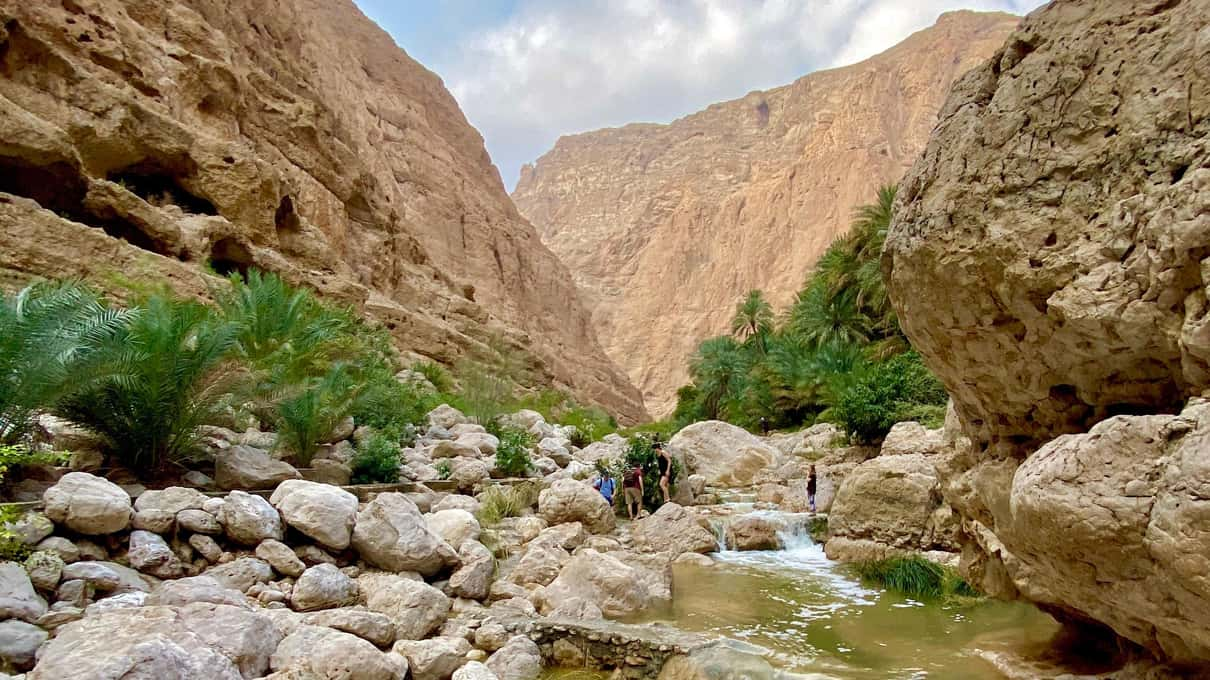
A summer day at the pools can still be pleasant, since you spend much of it in the water. The walk in and out is the hard part, on rock that holds the heat, so take more water than you think you need.
Tour 1 lists high blood pressure and heart problems as reasons not to join, and summer heat adds to that strain. Anyone with those conditions should pick the cool months or skip the hike altogether.
Bottled water comes with tour 1, WEB Tour adds water and snacks, and Sunshine Tours Oman lists water too. On GidOman's Wadi Shab-only hike, bring your own, as our list of things to bring explains.
Most day trips to Wadi Shab spend about three hours in the canyon whatever the month. In summer those hours feel longer, so a start that reaches the trail before late morning helps more than any choice of tour.
The earliest start of the day
Once the heat arrives, the start time matters more than the month. WEB Tour's 6:30 am departure gets you onto the trail well before midday, while a 10:00 am pickup reaches the wadi close to the hottest hours.
One guest who arrived at 9:00 am found the wadi quiet, and another who came on New Year's Day met many tourists. An early arrival seems to help on both counts, with cooler air and fewer people waiting at the boat.
More hours in the wadi, at your own pace
With a four-wheel-drive car to yourselves, leaving Muscat at 8:30 am, the company also covers Fins beach and Tiwi at a slower pace. Food is not part of the price, so pack your own.
A family on this tour in January found the weather pleasant, though the trail proved quite challenging for a slower child. Our page on Wadi Shab with kids lists the age limits on each tour.
Weekends and holidays
Guests say Wadi Shab gets busy on holidays, and a WEB Tour guest advises going early for that reason. The weekend in Oman falls on Friday and Saturday, so local visitors may add to the crowd on those days.
A weekday in the cool months gives you the best odds of quiet pools. If your dates are fixed, pick an early start and accept some company at the boat crossing.
Rain and flooding
Rain is rare, and most of it falls in the cooler months. A heavy downpour in the Hajar Mountains can still send water racing down a wadi, which can stop the hike for a day or more.
On Viator, WEB Tour offers another date or your money back when the weather cancels the trip. Every option here lets you cancel up to 24 hours before the start, so watch the forecast and keep your plans flexible.
Turn back whenever the guide or people from the village warn of rising water. Nobody can promise a full pool or a strong waterfall, and water levels also decide whether the boat at the mouth runs on a given day.
Ramadan and lunch
Ramadan moves through the calendar each year, so check its dates against your trip. Several tours drop lunch during the month, including GidOman's group day and WEB Tour's private day.
Ask the company how the day runs and bring snacks if lunch is dropped. During the fast, modest clothing matters even more than usual, and our dress code page covers the trail and the village.
Once you have a month in mind, see how each day splits its hours and pick a start time to match. Our page on Wadi Shab prices shows what each option costs, and the drive from Muscat lists every pickup window.